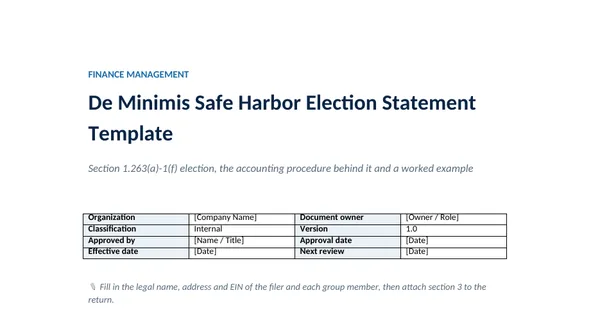
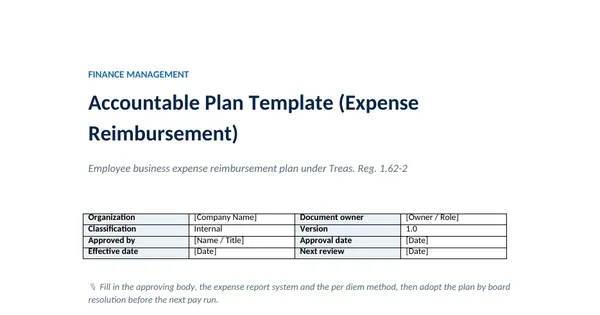
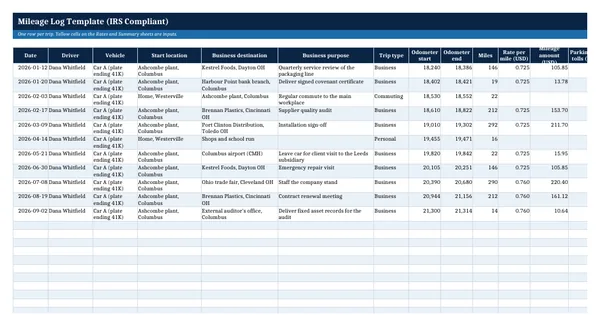
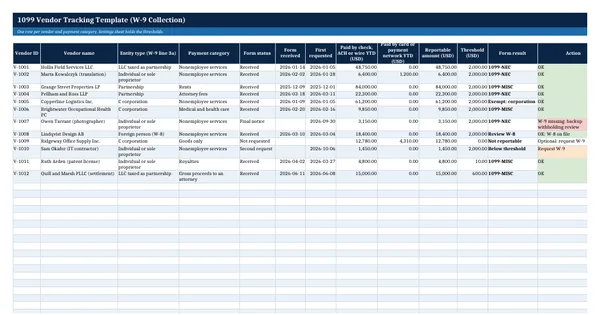
 Excel workbook preview
De Minimis Safe Harbor Capitalization Calculator
3 free downloads per account. Just your email and a 6-digit code.
About this template
The de minimis safe harbor lets a business deduct amounts paid for tangible property at or below a set limit per invoice or per item, instead of capitalizing and depreciating them, if it elects the safe harbor each year and treats the same amounts as an expense in its books. A fixed asset accountant needs a clear test when an auditor or the tax preparer asks why some purchases were expensed and others capitalized.
This calculator applies Treas. Reg. section 1.263(a)-1(f) line by line. It sets the limit from the eligibility answers (USD 5,000 with an applicable financial statement and written procedures, USD 2,500 without one under IRS Notice 2015-82), adds delivery and installation billed on the same invoice, keeps out inventory, land and certain spare parts, and checks that the books treat each item the same way.
Who it is for
The fixed asset accountant or tax manager who must show which purchases were expensed under the safe harbor and why.
What is inside
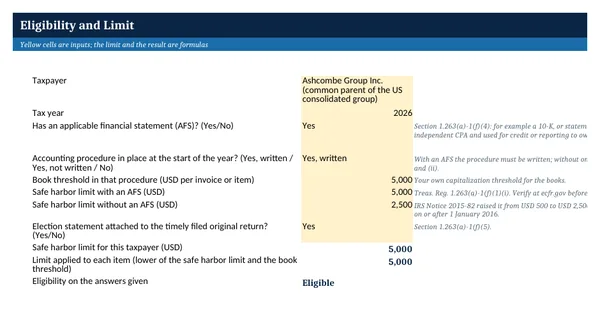
- Eligibility sheet: applicable financial statement, accounting procedure, book threshold, election, with a live result
- USD 5,000 limit with an AFS (Treas. Reg. 1.263(a)-1(f)) and USD 2,500 without (Notice 2015-82) in input cells
- Invoice test with 12 worked lines and 16 blank rows: cost per item includes same-invoice costs
- Excluded property kept out automatically: inventory, land, rotable spare parts under the optional method
- Book treatment check that flags lines to expense in the books and book-tax differences
- Summary of amounts and lines by tax treatment and by property type
- Worked example for Ashcombe Group with audited financial statements
How to use it
Answer the questions on the Eligibility sheet first, then enter each invoice line with its same-invoice costs.
Files
- XLSXde-minimis-safe-harbor-capitalization-calculator.xlsx16 KB
Opens in Microsoft Word or Excel, Google Docs or Sheets, and LibreOffice. Built on free, official texts that anyone can read: laws, regulations, standards and guidance published by public bodies. A template to adapt, not legal, tax or accounting advice.
Questions about this template
What is the de minimis safe harbor limit?
Under Treas. Reg. section 1.263(a)-1(f), a taxpayer with an applicable financial statement and written accounting procedures can use a limit of USD 5,000 per invoice or per item. A taxpayer without one can use USD 2,500, raised from USD 500 by IRS Notice 2015-82 for tax years beginning on or after 1 January 2016.
Do delivery and installation costs count toward the limit?
Costs billed on the same invoice as the property must be included in its cost for the limit test, allocated among the items on a reasonable basis when the invoice covers several. Costs billed on a separate invoice do not have to be added. The calculator adds same-invoice costs per line.
What property is outside the safe harbor?
The regulation excludes amounts paid for inventory or property intended for resale, land, and rotable, temporary and standby emergency spare parts to which the optional method of accounting applies, along with certain other spare parts. The calculator marks these lines as outside the safe harbor.