

 Word document preview
UK Corporate Governance Code and FRS 102
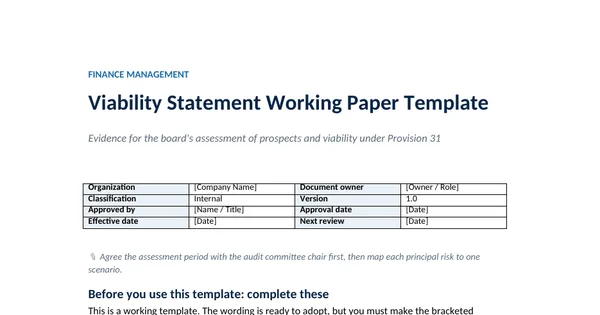
Viability Statement Working Paper Template
3 free downloads per account. Just your email and a 6-digit code.
About this template
A viability statement is the board's explanation, under Provision 31 of the UK Corporate Governance Code 2024, of how it assessed the company's prospects, over what period and why, and whether it reasonably expects the company to continue in operation and meet its liabilities over that period. It sits in the annual report next to the principal risks and the going concern statement, and investors and the FRC read the three together.
This working paper shows how an invented listed group, Kestrelmoor Group plc, reached its statement for the year ended 31 December 2026. It covers the two stages the FRC Code Guidance describes, the assessment period, scenarios linked to principal risks, stress and reverse stress test results, mitigating actions, qualifications and assumptions, consistency checks and the draft statement. It rests on the free FRC Code, Code Guidance and going concern guidance.
Who it is for
The financial controller or company secretary of a UK listed company who must evidence the viability statement for the audit committee before the annual report is approved.
What is inside
- 11 numbered sections taking the board through the two stages the FRC describes: prospects, then viability
- Comparison table of the going concern statement and the viability statement
- Assessment period of three years with the factors behind it, drawn from the FRC Code Guidance
- Principal risk scenario table with 6 scenarios, including a combined case
- Stress test results table with liquidity headroom, leverage and interest cover against covenants
- Reverse stress test, mitigating actions table and specific qualifications and assumptions
- Consistency checks and a draft viability statement ready for the audit committee
How to use it
Agree the assessment period with the audit committee chair first, then map each principal risk to one scenario.
Files
- DOCXviability-statement-working-paper-template.docx41 KB
Opens in Microsoft Word or Excel, Google Docs or Sheets, and LibreOffice. Built on free, official texts that anyone can read: laws, regulations, standards and guidance published by public bodies. A template to adapt, not legal, tax or accounting advice.
Questions about this template
How long should the viability period be?
The FRC Code Guidance says the period should, except in rare circumstances, be significantly longer than 12 months from the approval of the financial statements. The board picks it from factors such as investment and planning periods, debt maturities, contract lengths and the stage of the business, and explains why. Many companies choose three years to match their strategic plan.
What is the difference between going concern and viability?
The going concern statement says whether the going concern basis of accounting is appropriate, over at least 12 months from approval of the financial statements. The viability statement looks further ahead, over a period the board chooses, and says whether the board reasonably expects the company to continue in operation and meet its liabilities as they fall due. The two analyses should be consistent.
Is a reverse stress test required?
The Code does not require one. The FRC Code Guidance says the analysis should weight downside risks more heavily than upside and may include reverse stress testing, which starts from failure and works back to the circumstances that would cause it. It is a useful check on whether the scenarios chosen are severe enough.
More UK Corporate Governance Code and FRS 102 templates
UK Corporate Governance Code and FRS 102
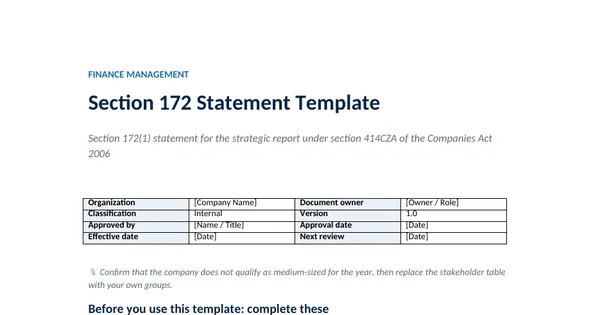
Section 172 Statement Template
UK Corporate Governance Code and FRS 102
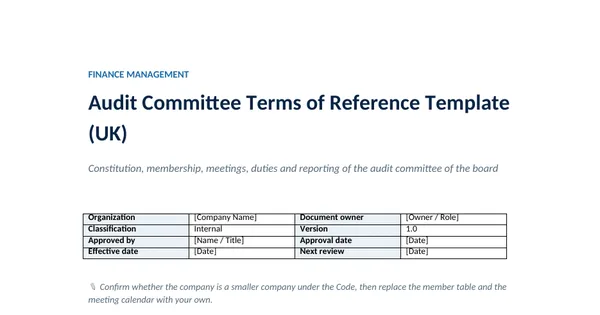
Audit Committee Terms of Reference Template (UK)
UK Corporate Governance Code and FRS 102
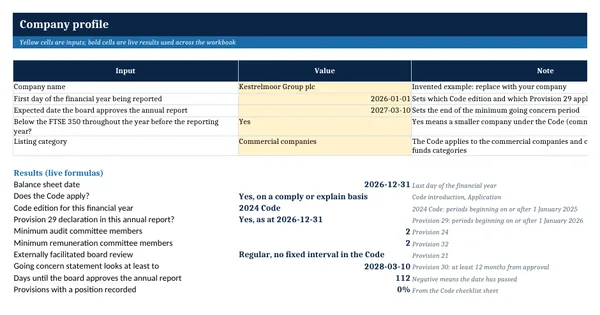
UK Corporate Governance Code 2024 Compliance Checklist
UK Corporate Governance Code and FRS 102